Whole Wheat Pitas


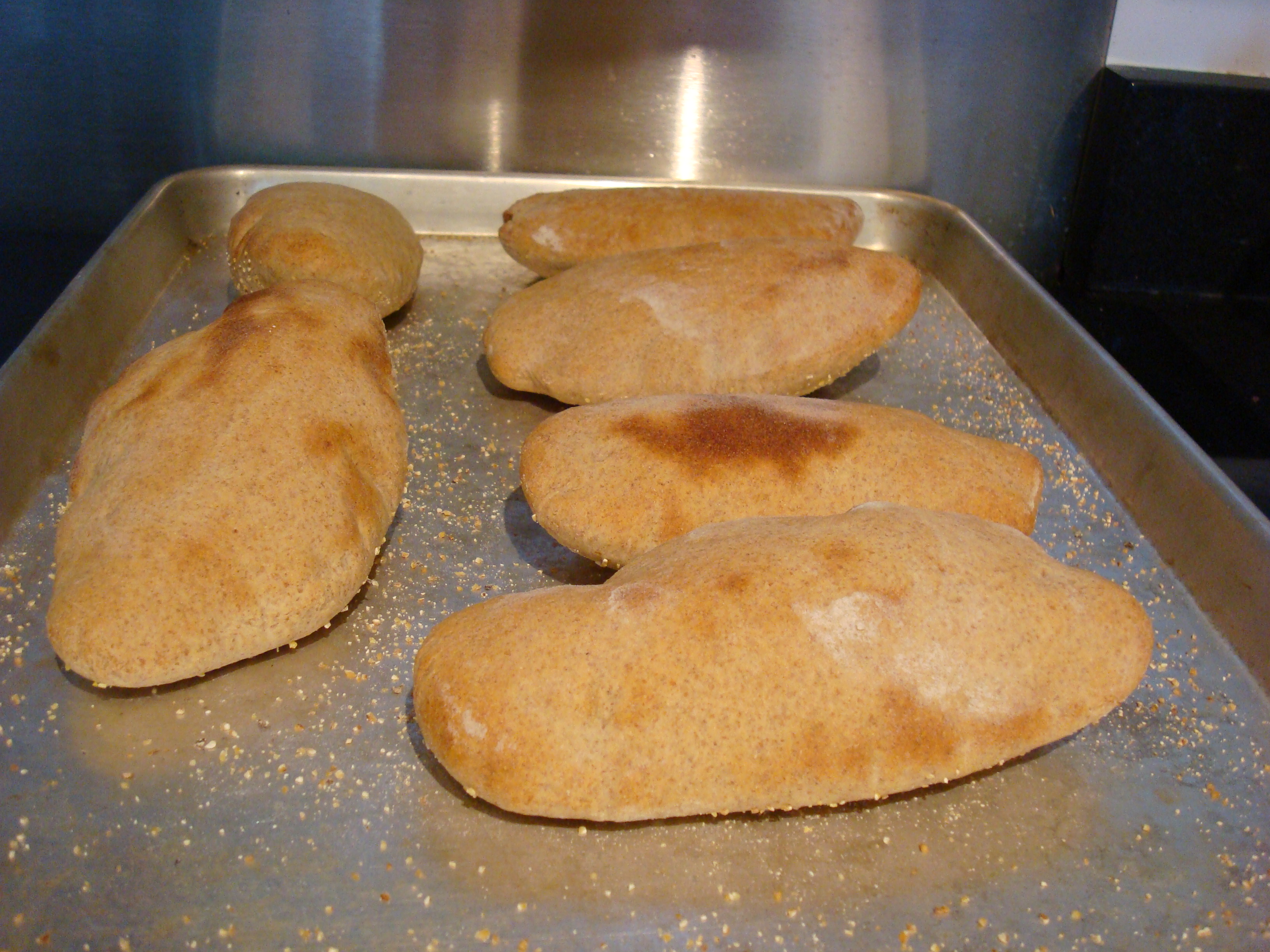
(^Those are whole wheat ones)

Has anyone been to Lebanese Taverna? It’s my grandmother’s favorite restaurant because of the cute puffy little pitas that are served. The pitas are white, soft little pillows of bread that are served piping hot. She loves these pitas.

(^Whole wheat dough)

A few days ago, I was making pizza, when I just tossed the leftover dough into the oven, and it ballooned into a little pita. It was delicious! So I tried it again, and then again with whole wheat flour. And then again with some honey. I ate these little pitas with cheese and some avocado…. but then I wanted more! So I made more. The water added to the dough fluctuates depending on the type of whole wheat flour you use. Keep in mind that whole wheat dough requires just a bit more water than regular dough to keep the bread soft.


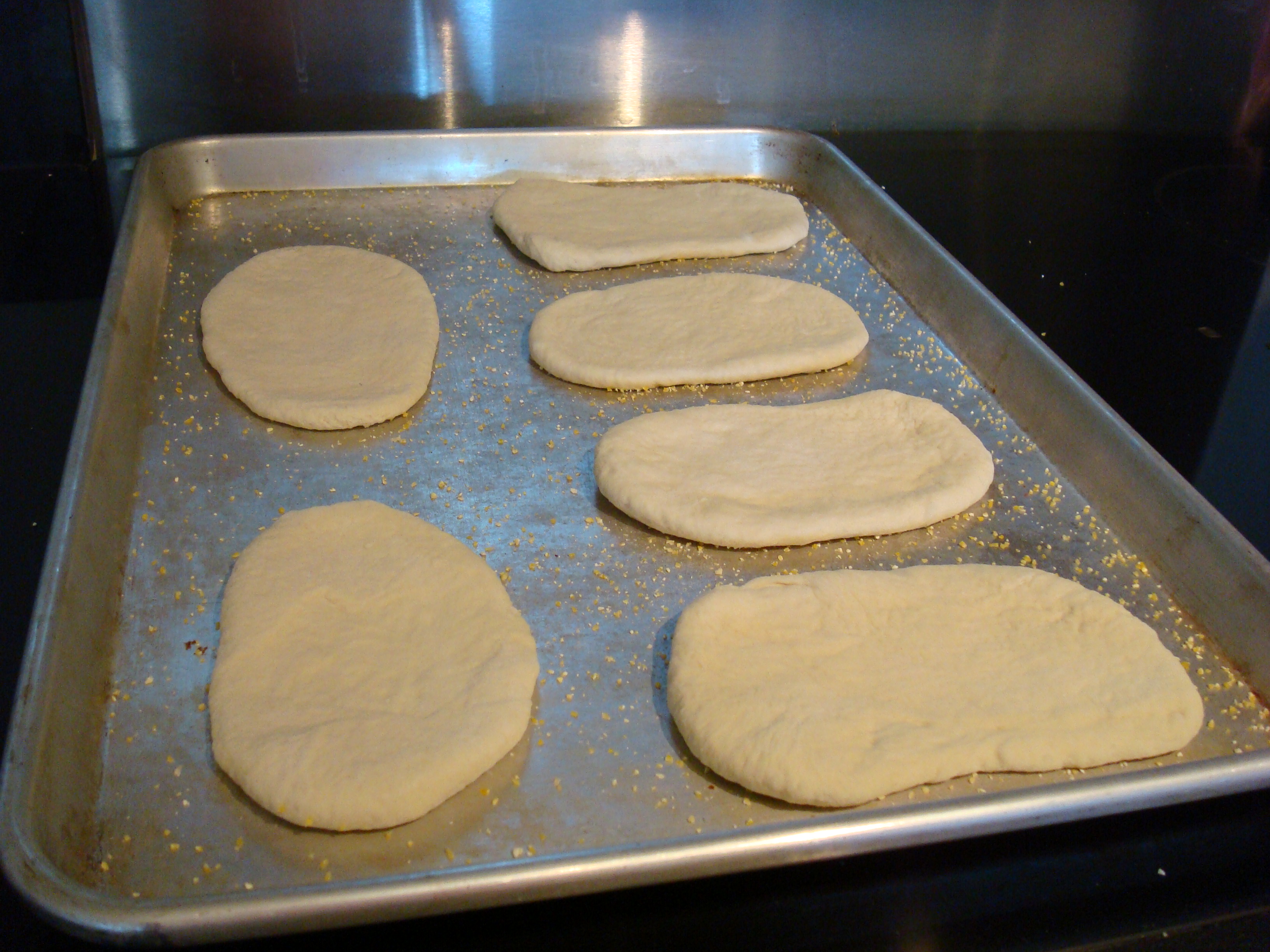
(^ Whoops! A plain dough picture… hehe)

Whole Wheat Pitas (Kaprise Kitchen, adapted from a cookbook, which I don’t remember the name of (and I’ll promise to update, but inevitably forget))

  • 1 1/2 cups of whole wheat flour
  • 1 1/2 cups of bread flour
  • 1 teaspoon of salt
  • 1 1/2 teaspoon of active dry yeast
  • 1 cup of warm water
  • 3 tablespoons of honey
  • 1 tablespoon of olive oil
  1. In a mixing bowl, sprinkle yeast over the warm water. Allow the yeast to soften and bloom for about 10 minutes
  2. Sprinkle the whole wheat and bread flour over the water. Sprinkle the salt over the flour (salt can kill yeast, but I find that this method works best.
  3. Drizzle the honey over the flours and salt and begin to incorporate all of the ingredients into a shaggy ball
  4. Using your hands (washed first!!), knead the dough to combine all of the ingredients. Add another tablespoon of warm water if the dough is stiff and hard to work with.
  5. The dough should be supple and warm to touch. It should be just a bit more moist than regular bread dough.
  6. Add the olive oil to a clean bowl and roll the dough in the oil to coat. Cover the bowl with plastic wrap and a dish towel.
  7. Allow the dough to rise at room temperature for 3 hours, or until doubled.
  8. Once the dough has doubled,  knead the dough for 10 minutes to redistribute the yeast.
  9. Allow the dough to rise again, this time in the refrigerator for at least 3 hours, but overnight is best.
  10. Allow the dough to come to room temperature before kneading and dividing into 16 equally sized balls
  11. Preheat the oven to 500 degrees Fahrenheit
  12. Roll the dough into ovals, about 1/2 inch thick.
  13. Sprinkle cornmeal on a baking sheet before placing the dough on the sheet (this helps prevent sticking)
  14. Bake the pitas for 8 to 12 minutes, until puffy and golden.

(The next two pictures are plain dough pitas)

(I forgot to take pictures when I rolled the whole wheat ones out)

Comfort Food: Galbi Jjim (Braised Short-ribs)

This is a recipe for Korean braised beef short-ribs… my way. My mother used to make this for me with the proper accoutrements (ginko, chestnuts, dried mushrooms, and Korean radish), but I was delirious, compliments of my cold, at the supermarket so I made do when I got home with a random assortment of food items. The recipe itself is pretty straightforward, but it is important to properly prep the short-ribs before braising them with the sauce and vegetables, otherwise your dish will been extremely greasy because of the heavy marbling in the beef.

Galbi Jjim

  • 2 pounds of bone-in beef short-ribs
  • 1 1/2 cups of filtered water
  • 1/4 cup of soy sauce
  • 2 tablespoons of sesame oil
  • 3 tablespoons of fresh chopped garlic
  • 1 small sliced onion
  • 1 teaspoon of brown sugar
  • 1 small bunch of sliced green onion
  • 2 King Oyster mushrooms, sliced
  • 2 red potatoes, cubed
  • 2 carrots, 1 inch slices
  1. Cut the short-ribs, one bone per piece.
  2. Place the short-ribs into a large pot, with the bone vertical. Fill the pot with cold water and allow the beef to soak for 1 hour. Change the water three to four times.
  3. Change the water in the pot one final time, and bring the pot of ribs and water to a rolling boil
  4. Simmer the ribs for 15 minutes
  5. During this time, whisk the water, soy sauce, sesame oil, garlic, and white onion into a bowl.
  6. Remove the ribs with tongs and place on a clean dish. (I also rinsed the ribs under cool water once more to remove a little extra fat)
  7. Pour the remaining liquid into a heat-proof bowl*(because of the high fat content, flushing the liquid down the sink will clog your drain. Instead, let the liquid cool and the fat to float to the service. Discard the fat in the trash. The remaining poaching liquid is beef stock that you can either keep for another dish, or discard. I kept it and put it in my beef stew I made the following morning)
  8. Clean out your pot, and then place the ribs back inside of the pot.
  9. Add the soy sauce mixture, and simmer over low heat for 15 minutes
  10. In the mean time, slice the potato, carrot, green onion, mushroom (and really any other vegetable that you want to add, just make sure it’s a sturdy vegetable that will hold up after simmer for an hour).
  11. Add the vegetables to the pot, and using a spoon drizzle some of the liquid over the vegetables
  12. Cover tightly and simmer over low heat for 1 hour. (DO NOT OPEN THE LID OF THE POT FOR ONE HOUR)
  13. Check the beef after 1 hour by sliding a knife into the meat. If your knife slides in the meat easily, the dish is ready. If the meat resists, then cover and simmer for another 15 to 30 minutes.
  14. Serve with steamed rice 🙂

Notes on this recipe:

  • This is not a traditional Galbi Jjim recipe… at all
  • Use a heavy pot, like a Le Creuset, with an equally heavy lid
  • Do NOT open the lid of the pot while the meat is simmering, the steam that forms inside of the pot is essential in allowing the meat to cook evenly.
  • Be sure to use LOW heat to ensure your braise doesn’t burn and that you have even cooking
  • Two pounds of short-ribs is enough for two to three people
  • Left-overs keep well for up to 3 days (That’s how long mine stayed in my fridge before I devoured it, I’m sure it’s good for up to a week, but I can’t guarantee past 3 days).

Links to Click

17 Degrees

After spending a week in Florida, with my furry jacket stuffed in my suitcase and dancing down the streets in flats and running outside in the sunshine, I’m feeling down. I want to go back and pick up another bushel of blood oranges and walk on the beach with the sand squishing in my toes while the red juice runs down my chin. I want to put that $15 bikini I fished out of a clearance bin back on and roll around on the sand.

Not to mention the start of classes. EWWW. I’m happy to be back in my cozy apartment with my fluffy little munchkin, but  this morning when the thermometer read 17 degrees… I was blue. 17 degrees is even too cold for a cold weather running junkie like me. My little dog was thrilled, it’s not wonder, because she was born wearing a cashmere sweater… but me? I was born cashmere-less.

Anyway, this general ennui has spread… I’m sitting in the library leafing through Income Tax law and looking through pictures from last week. The sun! The sand! The beautiful hotel!

Normally when I am stuck inside I resort to baking, rolling out jam tarts and baking mounds of chocolate cupcakes. This time? I have  rolled like a taco in my blankets and watching itunes movies on repeat. I didn’t even finish unpacking from Florida yet! And this morning? I realized the puff pastry I was defrosting on Friday was still on the counter in a floopy and gloopy mess. I realized this morning, as I chucked this goopy mess, that I must need a new spark. And inspiration.

So I have given myself a project. I will post every single Monday and Friday of each week (twice a week!) with recipes, pictures optional. You all can keep me on track.

This is a recipe for bbq chicken that I use frequently when I feel that the massive quantities of buttered bread should be offset by some protein. The removing the skin from the chicken is a bit tedious, but it is well worth it.

BBQ Oven Roasted Drumsticks (a Kaprise Kitchen original and favorite)

  • 6-8 chicken drumsticks, rinsed and patted dry
  • 1/2 cup of bbq sauce
  • 1 tablespoon of Worchestire sauce
  • 1/2 teaspoon of red pepper flakes
  • 1/2 teaspoon of crumbled lavender
  • 1 tablespoon of honey
  • 1 teaspoon to 2 teaspoons of whole grain mustard
  • salt/pepper to taste
  1. Preheat the oven to 425 degrees Fahrenheit
  2. Using a pair of kitchen shears, remove the skin from the chicken drumsticks. I slide the tip of the shears under the skin and cut from the meaty part of the chicken to the end of the bone. Then I cut through the little tendon and peel the skin from the meaty section down and over the end of the bone. Then I push back the clear and gelatinous membrane from the chicken before rinsing and patting dry.
  3. Cut two diagonal slices into the meaty part of the drumstick, just until a little before you hit the bone.
  4. Whisk the bbq sauce and ingredients together in a small bowl. Using a basting brush, brush the chicken with  sauce
  5. Reserve any remaining sauce for basting
  6. Lie the chicken in the baking dish with about 1 inch of space on each side.
  7. Bake chicken for 30 minutes, rotating the pan once during cooking and basting with remaining sauce
  8. Raise the temperature to 450 degrees Fahrenheit, and continue baking for another 10-15 minutes or until the chicken is browned and the juice run clear when you prick with a knife.
  9. Let the chicken rest for about 5 minutes before serving

Notes on this recipe:

  • Skinless drumsticks are available for purchase at some groceries, however they normally charge up to 2xs more per pound for skinned chicken. I prefer to do it myself (because I am a control freak) and normally buy about 5-10 pounds of drumsticks, skin the chicken and then store it in freezer bags (4 per bag) for whenever I want to have this dish.
  • I use a specific type of bbq sauce (with a yellow label), but the name escapes me right now… but that one is my favorite. Feel free to use any type of sauce you want… this chicken is just as good with a soy/ginger sauce as it is with bbq sauce.
  • During baking, try not to open the oven more than once to rotate the pan, the high temperature required for this dish is essential in having the chicken cook evenly and brown perfectly.
  • If you prefer a slightly crisper crust on your chicken, sprinkle a little salt on the tops of the chicken, it’ll help crisp up nicely.

How to Peel Pomegranate

I love pomegranate. Last week, I finally got to a good grocery store with beautiful, shiny pomegranates – so I bought 6. I wish I had bought more because I’ve run out. :::pitiful sigh:::

As an avid pomegranate lover, I have perfected the technique to peeling this fruit that frequently leave people covered in splotches and sticky juice. I have read some suggestions like “submerse the entire fruit in water and peel it under water….” Not to be rude, but do you know how much water you need to submerse the pomegranate? And do you know that instead of having little red dots of juice everywhere, you just have soggy pomegranate peel and water splashed everywhere and some red dots of juice anyway! I know. I’ve tried it…. more than once with very poor results. Or I’ve read that you should roll the fruit around until it’s mushy and then poke a hole in the fruit to drink out the juice…. I don’t know about you but that sounds like a lot of work for juice you can buy in an adorable bubbly bottle from POM. Plus, I want to eat the seeds!

So, here is how I do it.

  1. Buy pomegranate that are smooth, shiny, and dense. The denser the fruit, the more likely you are going to get sweet seeds
  2. If this is your first time peeling pomegranate, change into black clothing so you don’t ruin anything. Pomegranate has bright red juice that turns purple and blue when you try to wash it out… and with Shout! it turns into a vibrant neon blue. So, black it is.
  3. Wash the pomegranates
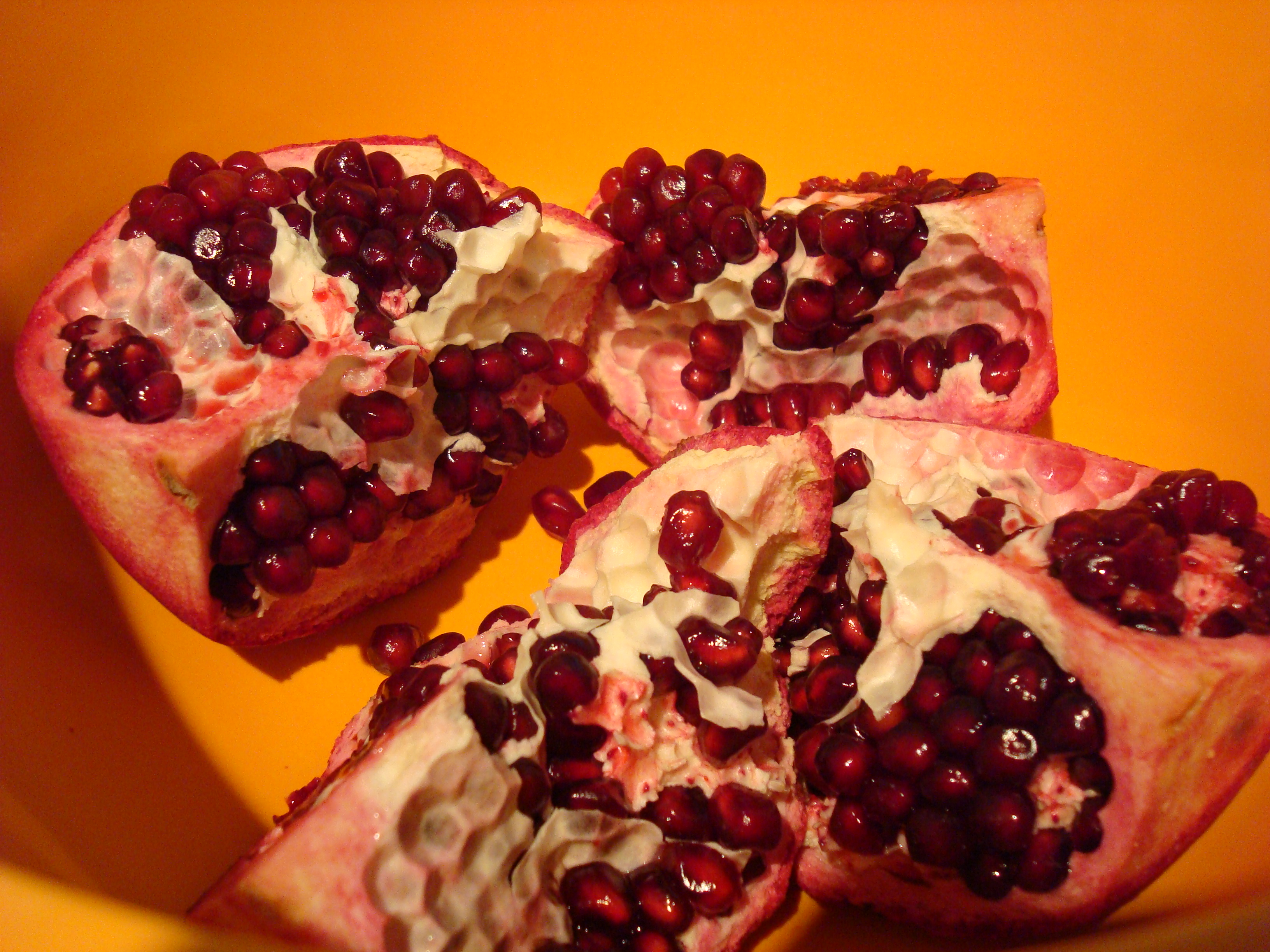
  4. Cut the flowering end of the pomegranate off (I called this the top of the fruit, until I saw a pomegranate tree and apparently it’s the bottom!!). Try to avoid cutting into the seeds
  5. Cut the pomegranate in half, about 1 inch into the entire fruit
  6. Cut at a 90 degree angle another 1 inch cut into the fruit (see pictures below for an accurate image)
  7. Flip the cut side down facing a large bowl and pry the fruit apart. Try to put your hands and the fruit as far into the bowl as you can so that the juice and seeds don’t spray as you separate the quarters of the fruit
  8. Repeat this process with as many pomegranates as you plan on peeling (in the photos, I’m peeling 3 very large pomegranates at once).
  9. Line the quartered pomegranate up on a plastic mat or surface that doesn’t stain
  10. Starting with one quarter, face the seeds into the bowl and break the piece in half. This should expose more of the seeds.
  11. Gently remove the membrane of the fruit and dislodge the seeds into the bowl.
  12. I keep a produce bag open next to me so I can collect the peel and membrane as I peel.
  13. Continue splitting the quarters apart and dislodging the fruit

Personally, I like put the seeds in a huge bowl, and grab a spoon and eat the entire bowl while I watch TV or read a book. I love the tartness and the little bursts of juice. But, in attempt to keep my stash a little longer, I put the seeds in an airtight container and refrigerate the seeds. I sprinkle them (at least 1 cup!) over some Greek yogurt and homemade granola (I’ll post that recipe soon).

Cut the flowering end off

Cut in half about 1 inch into the fruit

Now, the second cut, perpendicular to the first

Pry the quarters apart

Set the quarters on a flat and non-staining surface, set up your bag and bowl and beginning dislodging the seeds

And with a little patience – VOILA!!

Did you know?

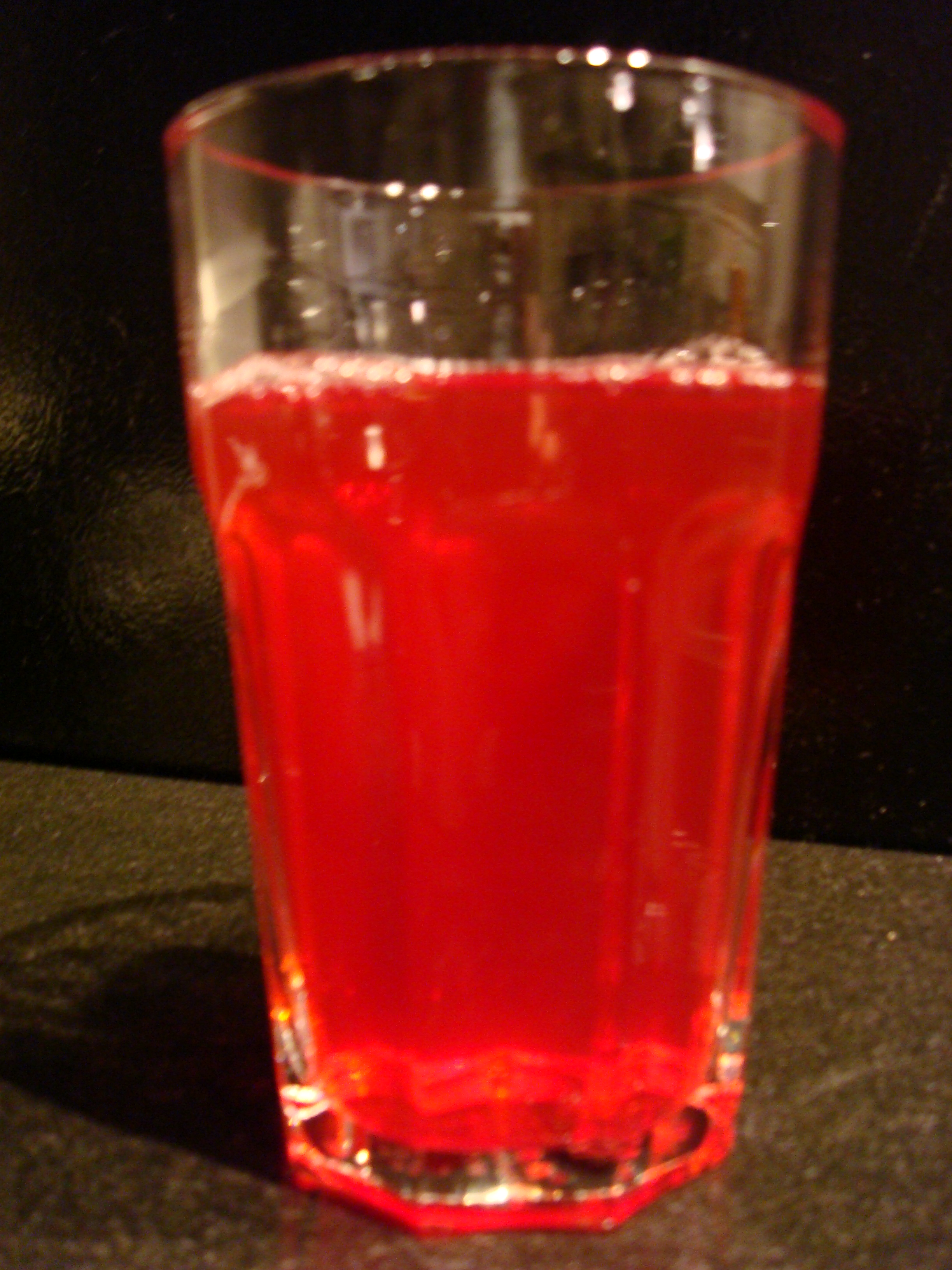
I love surprises. I like facts that you wouldn’t expect and recipes that are so easy it’s amazing. So it was no surprise that when I discovered I could make cranberry juice, I was thrilled. I have been making my own tart and lime spiced cranberry sauce for Thanksgiving for years, but it never occurred to me that I could in fact make my own jewel toned tart juice. I adapted this recipe from here (http://www.mytartelette.com/2006/11/mighty-cranberry.html). Instead of sugar, I use clover honey and instead of discarding the cranberries after extracting the ruby juice, I whizz them in a blender with ice cubes and blueberries.

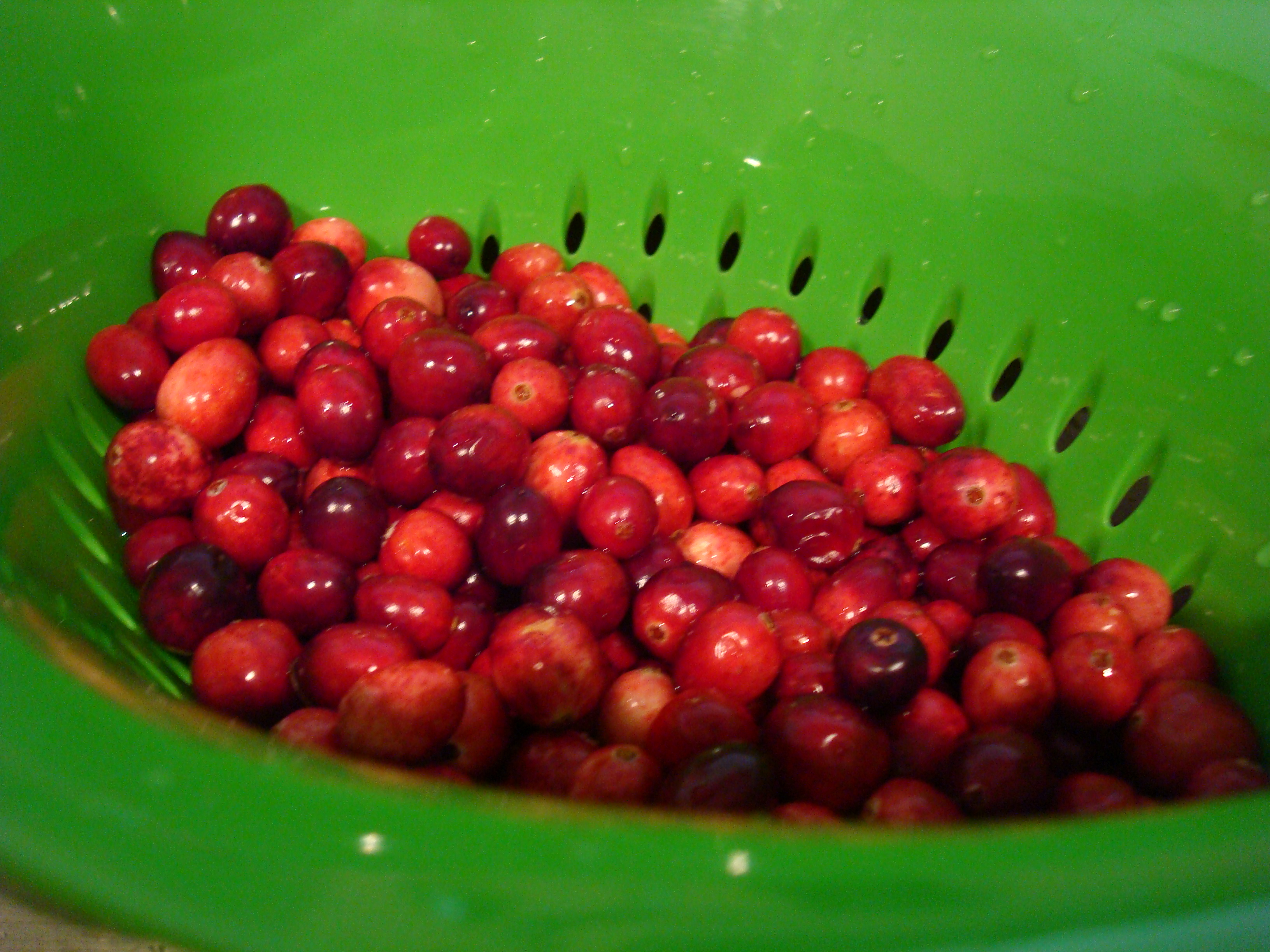
Cranberries, juiced and smoothied

  • 3 to 4 cups of cranberries, picked through (discard any mushy berries and pick out stems)
  • 1 to 2 quarts of water (I used my biggest pot and filled it with cold, filtered water)
  • 1/4 cup of your favorite honey (if you prefer sweeter juices, you dial this up to 1/2 a cup)
  • Handful of blueberries (or any other fruit. Peaches, oranges, banana, apples, are all good options)
  1. Add water to pot and bring to a rolling boil
  2. Add the cranberries and continue to boil until all of the berries have burst and the water has turned a beautiful red.
  3. Remove from heat
  4. Strain the juice and berries through a fine mesh sieve or cheese cloth, do not press on the berries
  5. Stir in honey until dissolved
  6. Allow juice to cool.
  7. JUICE: Put 1/2 cup of leftover berries* and a handful of blueberries and whizz in a blender with a few cubes of ice. Drink!

* You can feel free to discard these if you want, but as a poor as a church mouse law student, I try to maximize the yield for all of my purchases. (You know… so I have some money left over for pretty things). You will have about 2-3 cups of berries (they will be a little mushed) leftover. You can freeze these in 1/2 cup increments to add to any of your smoothies.

Butternut Squash Bulgar Wheat Salad

It just started getting cold in Baltimore this week, which coincides with the busiest time of the year for all law students. Well…. maybe not busiest, but absolutely the most stressful. And for a procrastination guru like myself, I find myself in the clutches of mini depression and annoyance because I am so drastically and embarrassingly behind. And of course, the only place I would ever admit this is here, because in law school it really is just all about hanging on.

Yesterday, after spending the entire day fooling around and then sleeping through class (how do you manage to spend 12 hours sitting around, and then manage to SLEEP in class?! How could you possibly be tired from doing nothing?? Well… it’s possible). So I ran to the grocery store for some much needed solace and then hurried back to my kitchen for some much needed therapy. Mind you, I was cooking 1 handed, at times with two but very gingerly. I made the fatal mistake of grating chocolate on my very new and very sharp microplane while drinking some delicious port (perhaps the bottle… but I can’t tell you that), so I am missing a grated portion of my thumb.

I have been looking at recipes for baked pastas and salads that keep well in attempt to study more and spend less time to my elbows in chopped veggies and bowls of flour. I couldn’t find anything that I really liked, so I picked two vegetables that I liked and then went from there.

The focus of this salad is really the wonderfully tender and beautiful butternut squash. I found an adorable and slightly smaller squash so I cubed and used the whole thing. I also found some fluffy curly leafed kale that I immediately paired with the squash.

I didn’t season the bulgar wheat at all, instead figuring if this giant bowl of food was supposed to last a week, then I would want different seasonings each day. I think the best thing to do is pick a different protein each day to toss with the salad and eat. I had mine with a little Italian dressing yesterday and some oil/vinegar this morning. Both were delicious. I’m planning on using this salad as the bed for my roasted chicken legs tonight.

Butternut Squash Bulgar Wheat Salad

(remember this is supposed to last all week, so the recipe is large. Feel free to halve or quarter as necessary)

  • 2 cups of uncooked bulgar wheat (you might consider quinoa or barley or any other whole grain)
  • 1 small butternut squash
  • 1 bunch of kale (or any other sturdy and hearty green)
  • 2 celery sticks, chopped
  • 2 carrots, peeled and chopped
  • 1 jar of olives (I used little green ones, but I think black or any other variety would work just fine)
  • 1 small bunch of fresh chives or green onion (red onion works too), chopped finely
  • juice of 1/2 lemon
  • handful of chopped figs
  • 1 cup of toasted and chopped walnuts
  • salt, pepper, and olive oil as needed
  1. Cook the bulgar according to package directions (I would suggest under-cooking by just a bit because the texture and crunch of al-dente bulgar adds more dimension to the salad). Drain and cool
  2. Bring a salted pot of water to boil
  3. Roughly chop the kale (use more than you think necessary since this boils down quickly)
  4. Peel and cube your butternut squash (you can buy this pre-sliced in my grocery but I like chopping so I did it myself)
  5. Plunge the kale into the boiling water and cover for about 3 to 4 minutes. I left most of the steams in the kale, so I boiled a little longer to soften the ribs of the kale. If you prefer crunchier kale, feel free to blanch.
  6. Remove and drain the kale – when the kale is cooled, you will need to squeeze the moisture out of the leaves. I realize this removes a lot of the nutrition, but the salad needs to be as dry as possible.
  7. Bring the water back to a boil and plunge the squash into the water. Cover and simmer for 5 to 10 minutes depending on the size of your cubes. You want your squash to be soft but maintain the cube shape.
  8. Drain and cool the squash.
  9. While your bulgar, kale, and squash are cooling – chop and prepare the other ingredients.
  10. In a very large bowl, toss of the ingredients with a teaspoon of olive oil. Mix well.
  11. Taste and season accordingly

Keeps for one week in a well sealed container.

Chop Chop

There is a commercial on TV right now that says “there is nothing more therapeutic after a long day of work than chopping and cooking… NOT” but for me? That is exactly true. I sharpen my knives, set my cutting board on the counter and chop. I like the evenness. I like the systematic chops.

This potato salad is heavy on the chopping, but the end result is thoroughly satisfying and filling.

Kaprise Kitchen Summer Potato Salad

  • 3 large Yukon Gold potatoes – steamed, cooled, and chopped in 1 inch cubes
  • 2 large carrots – steamed, cooled, and chopped into 1/2 inch coins (feel free to leave these raw if you like more crunch)
  • 1 bunch of crisp radishes – stemmed and chopped into coins and halved
  • 1 bunch of basil leaves – stemmed and chiffonaded
  • 2 celery stalks – cleaned and 1/4 inch diced
  • 1/2 small onion (or a small shallot) – finely diced
  • 1 tbl of grainy mustard
  • a splash of red wine vinegar
  1. Prepare the ingredients
  2. Mix in a large bowl and season with salt and pepper accordingly.

* Makes about 6 servings. Store in an airtight container for no more than 2 days.

Almond Kolaczki

I find myself in the kitchen, puttering around and measuring out cups of flour for a lot of different reasons… but I find myself leveling sugar and cracking eggs most when I’m hurt. Most people don’t realize the number of cookies and pies that I ease on to my counter is directly correlated to my happiness. It’s my way of healing myself… I put things together and make things whole and beautiful when I feel everything but. This summer has been a tough one, filled with lots of traveling and baking. Lots of baking. I have made hundreds of cookies, stewed pounds of fruit into jams and jellies, and whipped hundreds of eggs. So when a friend mentioned his grandmother used to make these cream cheese cookies that were light, flaky and dusted with snow white sugar I just had to try them.

I did a little research, and turns out the cookie he is talking about is “kolaczki.” The exact origins of the cookie is not known, but many countries claim it as their own and have their own variations. I only had a block of cream cheese and three boxes of butter in my refrigerator, so naturally I picked the easiest recipe that I had the ingredients for.

Instead of doing the traditional fruit filling, I rolled the dough into layers to enhance the flakiness and omitted the sugar and opted for almond paste. I took a tube of almost paste, dusted it with sugar and rolled it out thin. I sandwiched the thin almond paste between two layers of the kolaczki dough and cut scalloped circles dusted with raw sugar crystals. The result? A light cookie with a sweet almond layer, almost like a lighter and smaller almond croissant.

Kolaczki (Kaprise kitchen style)

  • 8 oz of cream cheese (I used Lucerne neufchatel cheese)
  • 12 oz of butter (3 sticks)
  • 3 cups of sifted all purpose flour
  • 7 oz of almond paste
  1. Let the cream cheese and butter soften at room temperature for 30 minutes to 1 hour.
  2. Beat the cream cheese and butter together until smooth and creamy
  3. Add 1/4 cup increments of flour, blending well. The dough will be very soft.
  4. Turn out on a lightly floured surface and shape into a square. Wrap tightly in plastic wrap and refrigerate for at least 6 hours.
  5. After the dough has rested, roll out the almond paste and set aside.
  6. Roll out the dough into 1/4 inch thickness. Place the almond paste between two layers and roll once to adhere the layers.
  7. Cut cookies out of the dough. Re-roll as necessary.
  8. Bake at 350 F for 15-20 minutes.

🙂 Enjoy!

Procrastination

It is the end of the semester, and I should be frantically reading and studying for my exams. I have 4 of them. One of them is a 4 hour written exam… 4 hours. Thank you Professor B for keeping it old school and making it a written exam.

Instead of doing anything law school related, I took one look at the bright blue sky, jumped into my running gear and bopped my way through an easy 3 mile run. I had every intention of showering and walking to the library when I got back, instead I opened my refrigerator and saw the chocolate and cream cheese I had stashed. Two hours later? I was easing a pan filled with gooey whole wheat chocolate chip cookies out of the oven and easing a pan of cheesecake swirled brownies in. And the minute the brownies were out of the oven, I pretended not to be a bad law student, loaded my bag up. Then I hurried a plate of brownies and cookies to my concierge before guiltily walking to the library.

I obviously am sitting at the law school library and still procrastinating. I might have spent an hour popping the keys of my keyboard to clean the keys, and another 30 minutes posting these recipes…. but no matter. Theses brownies and cookies were well worth it. These cheesecake-marbled brownies were found on the veritable smitten kitchen website. I halved the brownie recipe and kept the cheesecake the same because I like a higher ratio of cheesecake to brownie in mine, however I am sure the chocolate lovers out there will prefer the original recipe. I also left the chocolate chips off the top, and swirled the brownies significantly less (because I was trying to get a heart shape in the pan…. which did not work very well).

Gooey Almond Chocolate Chip Cookies (interpreted from everywhere! everyone has chocolate chip cookie recipes that they swear by, and this is my take on chocolate chip cookies. You’ll notice that this recipe is large. You can easily halve the recipe, but I think that is unnecessary. I bake 12 cookies at a time, and make neat little 1 tablespoon balls of cookie dough and freeze them in 12 cookie containers. When you want cookies, you can just pull a container out and plop them on a sheet before baking. Just add one or two minutes to the overall baking time.)

  • 2 cups of all purpose flour
  • 1 1/2 cups of whole wheat flour*
  • 1 1/4 teaspoons of baking soda
  • 1 1/4 teaspoons of baking powder
  • 1  teaspoon of Kosher salt (the flaky kind)
  • 1 1/4 cups of  unsalted butter, softened (2 1/2 sticks of butter)
  • 3/4 cup of brown sugar
  • 1/2 cup of turbinado sugar (sugar in the raw)
  • 1 cup of sugar**
  • 2 large eggs
  • 1 1/2 teaspoons of vanilla extract
  • 10 oz of 60% chocolate chips***
  • 3.5 oz of almond paste, cut into small cubes and tossed in a tablespoon of flour****

* I use Bob’s Red Mill Whole Wheat Flour for this round and the cookies were a pinch tougher than a normal cookie. I have had extremely good results with King Arthur White Whole Wheat Flour.

**I used Organic Cane Sugar, but feel free to use regular white granulated sugar

*** I used Ghirardelli 60% Cacao Bittersweet Baking Chips in the dark brown bag. I like the largeness of the chips, but feel free to use anything else you like. I use almost the entire bag, save for a handful of chips that I eat while I’m baking.

**** I used Odense Almond Paste. (This is NOT marzipan). It comes in a 7 oz tube, I cut it in half and throw one side in the freezer to firm up before I cut it. I cut with an extremely thin and sharp knife and put the little cubes in a bowl with a little flour to prevent the little cubes from getting stuck together. Also, though I only use 1/2 of the tube, I think the cookies would benefit from the use of the entire tube. Some of the cookies were lacking the tangy almond paste, which I found disappointing.

  1. Cube almond paste (see ingredient notes)
  2. In a large bowl, whisk the butter, brown sugar, turbindo sugar, and white sugar together until creamy
  3. Add the eggs, one at a time, whisking well after each egg.
  4. Stir in vanilla.
  5. Add 1 cup of all purpose flour and baking soda and baking powder and salt still until evenly incorporated
  6. Add the remaining 1 cup of all purpose flour, 1 1/2 cups of whole wheat flour, and stir until smooth
  7. Add the chocolate chips and almond paste cubes and stir until just incorporated
  8. Turn the oven to 350 F
  9. Spread parchment paper on a cookie sheet and drop 1 tablespoon rounds of cookie dough on the sheet about 2 inches apart. Flatten a little with the palm of your hand.
  10. Bake at 350 F for 15 minutes until just brown (check your oven to make sure that your cookies don’t need less or more time. My baking sheet is an industrial aluminum pan and so it tends to bake a little faster)

General Notes

  • I used turbinado sugar for the crunch it gives the cookies. Sometimes, to enhance the crunch in the cookies, I’ll increase the volume of this sugar and lower the brown sugar. I also add a drop or two of water in the white sugar to make up for the lack of brown sugar. The water helps achieve a deep molasses flavor in the cookies during baking, just be sure not to go overboard with this step.
  • These cookies bake at a lower temperature for longer, be patient, they are well worth the wait
  • Like most cookies, if you store this dough covered in your refrigerator, the flavors of the vanilla and sugar are enhanced and the cookies taste even better. The gluten in the flour relaxes and you get these amazingly tender and chewy cookies. I’m sure there are better explanations than mine out there, but I imagine it’s some sort of chemical reaction that creates a better cookie after the dough has rested in the refrigerator for a while. In any event, I tend to be on the impatient side, so I always make a pan of cookies before the dough gets anywhere near the refrigerator.
  • If you do store your dough in the refrigerator, make sure it is tightly wrapped and stored away from any smelly foods (like garlic/onions and leftover dinner). I have a sensitive nose, so the minute my cookies smell like dinner, I chuck them. Also, do not leave your dough in the refrigerator for more than a week. I’ve been told they can be left for 2 weeks… but something about eggs in flour for 2 weeks skeeves me out.
  • Do not melt your butter. Something about melted butter absorbs more flour and your dough turns into this weird texture. Do not melt! I’ve been told that softening the butter in 10 second intervals in a microwave is helpful. I didn’t grow up with a microwave, so I tried this and ended up with really hot butter coating the inside of my microwave. I usually take the butter out of the refrigerator, go for a run and take a shower before I start making the cookies. The butter is still firm but creamy at that point. The moment you see transparent yellow, throw it in the refrigerator until it firms up again.
  • Even if you are using parchment paper, make sure your pans are squeaky clean. If you have any residual oil or food on them from another meal, the oven will bake that smell and taste right into your cookies as they bake. Scrub those pans!
  • For non-stick pan users, you might consider lowering the temperature 10-25 degrees. Something about that dark coating makes cookies bake differently.

Kaprise Kitchen’s Inaugural Recipe

Welcome to Kaprise Kitchen!

To kick off this new shiny blog, here are the makings for Strawberry Key Lime Tart. I used red, ripe strawberries and these adorable little key limes. The key limes make me smile, they are these tight little ping pong ball limes with the tartest puckery flavor. And I love them! Plus, they keep relatively well in my refrigerator, which is always a plus.

For the crust: I like to contrast the sweet and tart filling of this tart with a flaky and slightly salty shortbread. Obviously, if the salty/sweet thing is not your cup of tea, feel free to omit the salt from the recipe and add a pinch more sugar to have a sweeter shortbread crust.

  • 1 stick (8 tbl) of unsalted butter, melted
  • 1/4 cup of sugar (you can use brown sugar for a dense crust, I used organic cane sugar)
  • 1 cup of all purpose flour
  • 1/2 tsp of flaky Kosher salt

For the filling: I really love the natural sweetness and tartness of the fruit in this tart, so I use less sugar than the average recipe. If you dislike tart desserts… dial the sugar up a few tablespoons

  • 2 large eggs (the size of your eggs is important, jumbo eggs will give you a looser filling, so you will have to add more of the other ingredients for this to work properly)
  • 3/4 cup of sugar
  • 1/2 cup of lime juice
  • 2 tablespoons of flour, sifted
  • lime zest (if I can’t find organic and spray free fruit, I don’t add the zest because it normally contains the highest concentration of pesticides

Instructions (with picture guidance)

Melt the butter in a small pan, make sure not to burn or boil the butter. You just want it to be melted. (I might have very quietly added this pretty little pan to my box of things when I moved out of my parent’s house.)

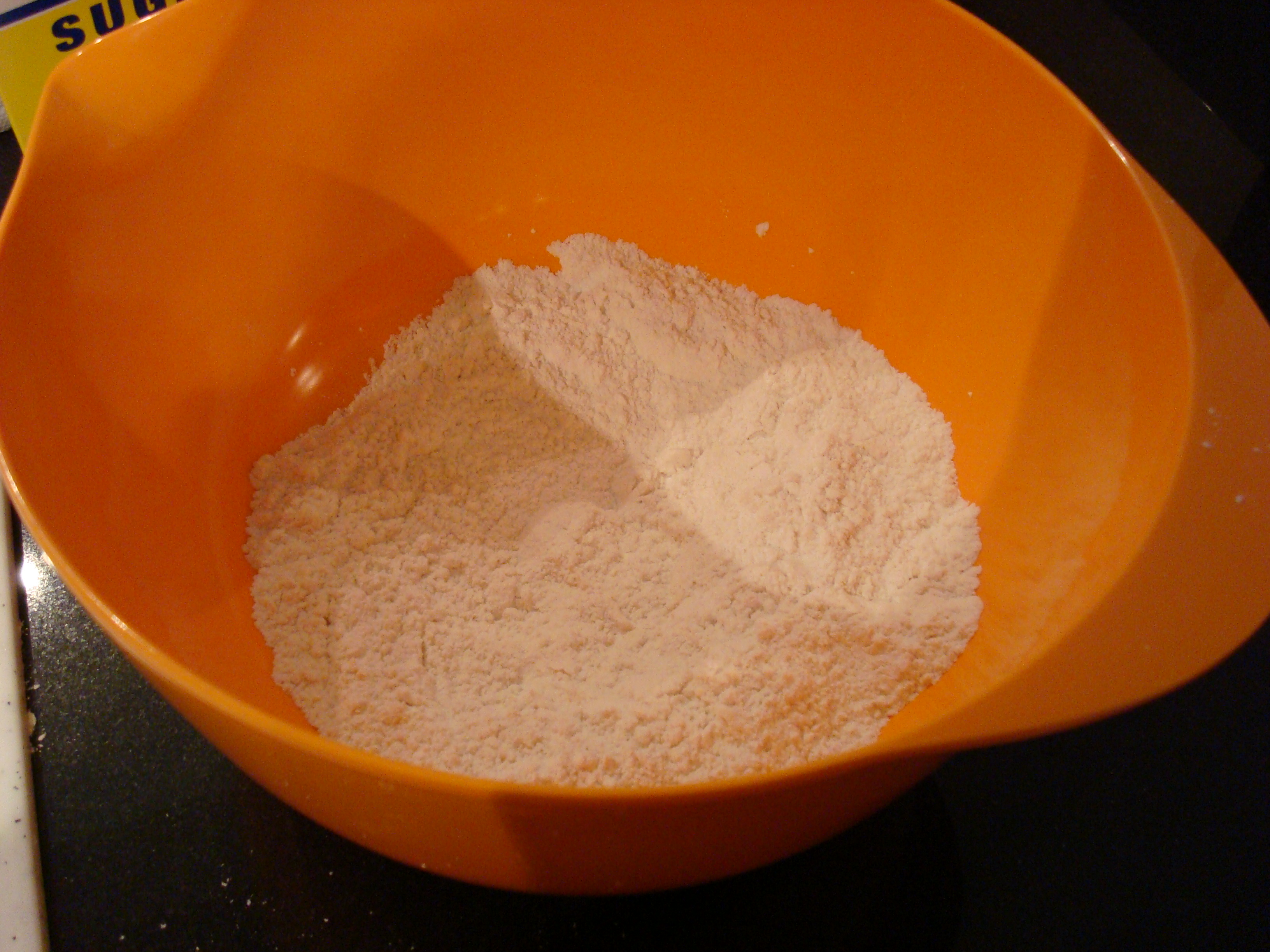
In a bowl, stir together the ingredients for the crust. Flour, sugar, salt.
Add the melted butter to the dry ingredients and stir until you get a soft and pliable dough.

At this point you need to determine if you should add more flour or not. Sometimes my dough is too sticky and I’ll add a tablespoon or two more flour to make the dough less sticky. If the dough is oily, add more. But, your dough should look something like this:
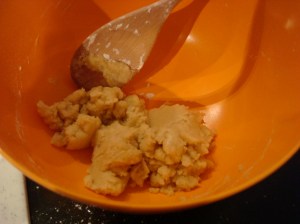
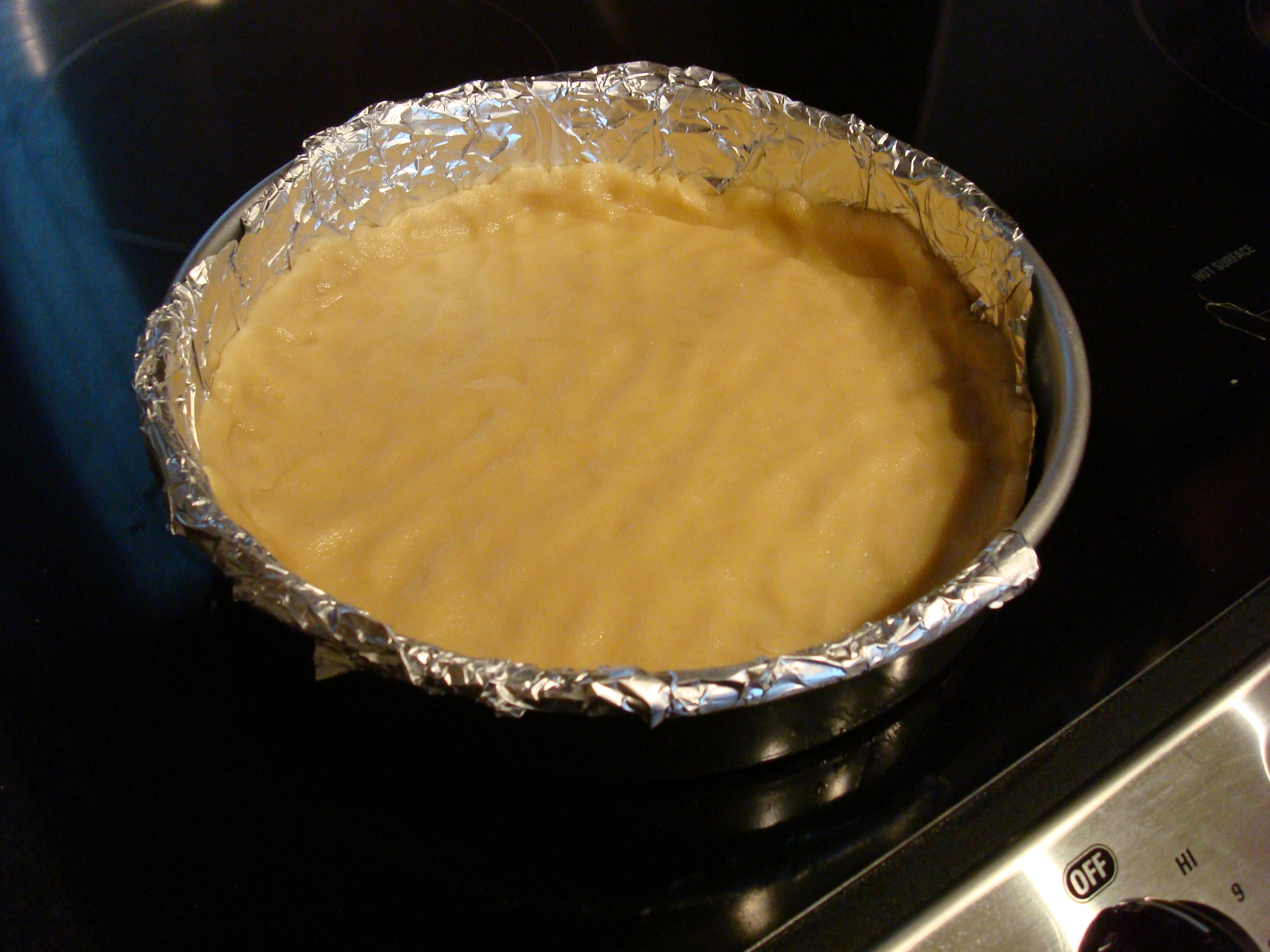
Gather the dough into a ball at the bottom of the bowl, and put it in the refrigerator while you prepare the pan. Cover a 9 inch round pan in foil. (Remember, dull side up).

Remove your dough from the refrigerator and pat it neatly into the bottom of the pan.
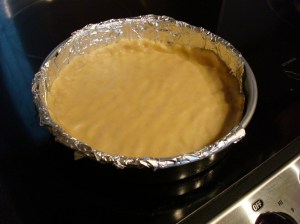
Set your oven to 350 F and let the crust bake until it is lightly browned, about 20 minutes. You can see that I set my timer for 25 minutes and my crust was a little too crisp. (I don’t preheat my oven because I really never remember to until the last minute, and I recently saw a commercial that told me pre-heating wastes energy.)

Now! While your crust was happily baking away, you should get the filling made. Quickly soap and scrub out your bowl and flip it to dry while you zest and juice the limes.

Remember, if your fruit is organic and spray/pesticide free, you should zest the limes before squeezing for juice. It’s easier to zest whole limes than chopped/squeezed ones. I was lucky enough to find these little organic and low pesticide limes, so I zested away. I used about 1 tablespoon of zest. (See my cute little citrus Microplane? Don’t ever buy it. That little bugger’s handle broke off 4 months after I bought it.  Thumbs down.)

Now, take your naked little limes, chop them in half and squeeze them into a glass. (I actually have a Pyrex measuring cup that would have been super helpful in this exercise, but I didn’t use it.) Key limes have a lot of seeds, so you will need to either pick them out with your fingers or strain the juice through a mesh sieve. I didn’t want to use my fingers and I don’t own a sieve, so I flipped my (currently handle-less) Microplane over and poured the juice through that to catch the seeds. Obviously, I am simultaneously writing this blog and buying a mesh sieve online.

Now, mix together all of the filling ingredients (sans the strawberries). Make sure the eggs and flour are beaten in well so that your final filling sets smoothly.

Chop your strawberries. I de-stemmed and cut them to show the pretty insides and sprinkled a little lime juice on them.

At this point, your crust should be sitting on your counter. Reduce the oven temperature to 300 F. Pour the filling into the pan, and neatly arrange the strawberries on top of the filling. (You want to make sure that you don’t overwhelm the tart lime filling with the sweet strawberries, and be mindful that adding too many strawberries will make your filling too loose).

Bake at 300 F for 20 minutes, or until the center is set. And when it comes out of the oven, it should be shiny, beautiful and utterly mouthwatering. (I realize this picture doesn’t look much different than the one before, but I promise it is the fully baked tart, and you will be able to see the difference when you make it!)
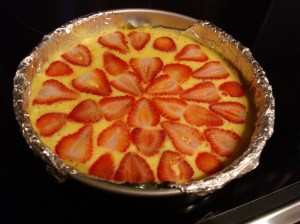
Let the tart cool in the pan. Or you can be super impatient like I was and try to take it out of your non-spring form pan (also buying one of those right now!) and then realize that a 300 degree tart is really really hot. And PLOP it on your floor.
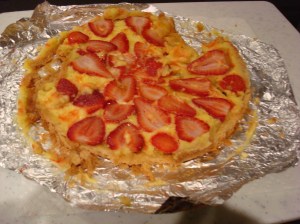
And even though you were terribly upset and mildly burnt from this tart, you lick your fingers and realize it was DELICIOUS. Plus… it helps when your munchkin hears the WHOMP and runs over with her toy, promptly dropping said toy, licking up the tart frantically…. and then begging for more.

So. Happy Inaugural Recipe!

Kaprise Kitchen!